

Discover Frigiliana
The story behind the postcard.
Three thousand people, three hundred metres up. A Moorish town that became a Christian one, that became a sugar-cane economy, that became one of Spain’s prettiest villages. Here’s the background reading — what makes Frigiliana feel the way it does, and when to come and see it.
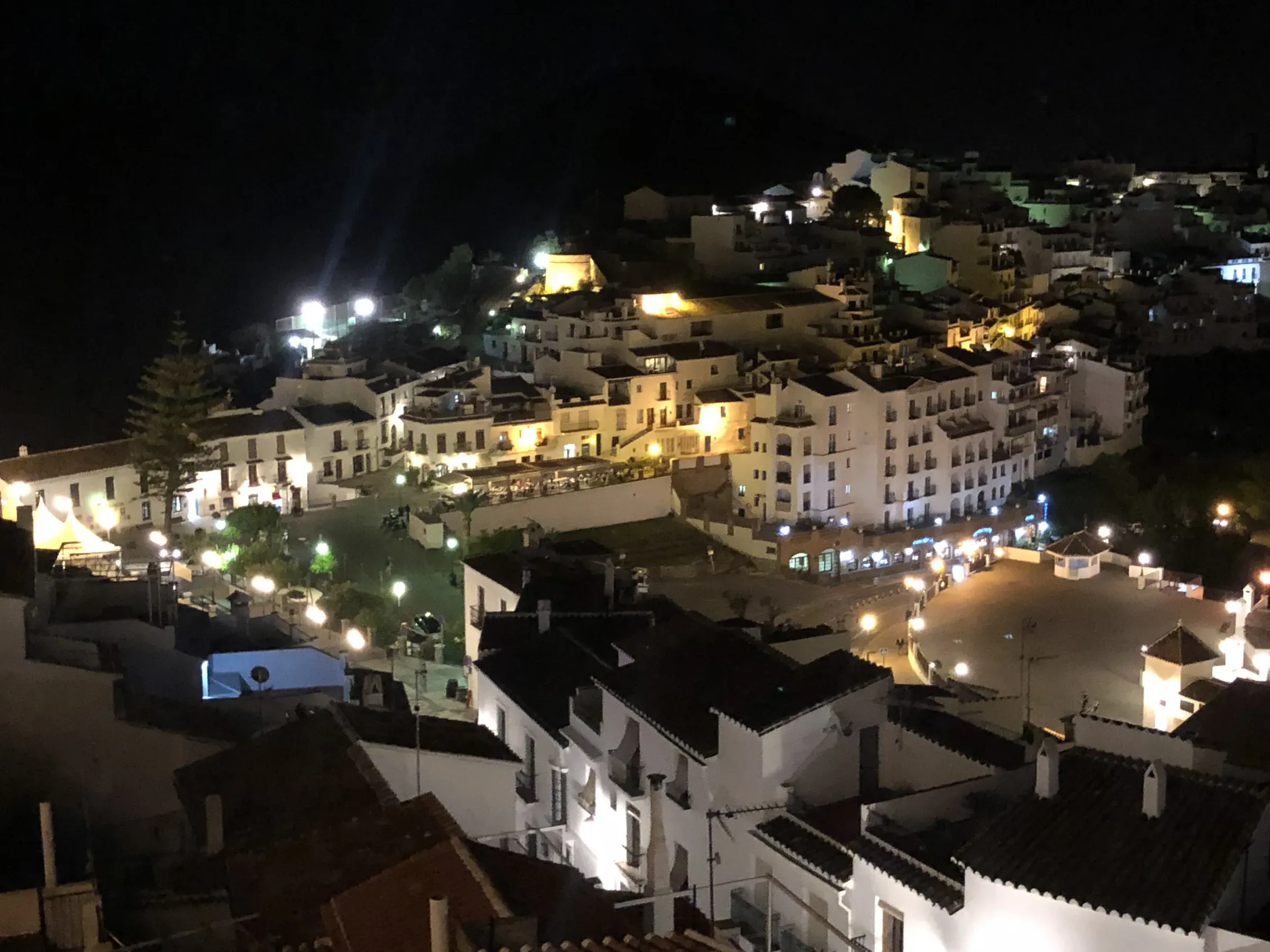
Most visitors come to Frigiliana for the look of the place — the whitewashed walls, the deep-blue shutters, the cobbled streets twisting up the hillside. But the village is older than its postcards. People have been living on this slope since the Neolithic. Phoenician traders passed through, then Romans, then for seven centuries the Moors — whose town plan, irrigation channels and sugar-cane farming still shape the village you walk through today.
The 1569 morisco uprising is the dramatic chapter every guidebook skims past. The sugar economy that built the modern village ran for five hundred years and only just stopped. The climate is what it is because the Sierra Almijara catches weather coming off the Mediterranean. Once you know any of that, the village reads differently.
This is where we’re collecting the long-form reading on Frigiliana — practical, well-sourced, written by people who live here.
Start here
The three foundations.
The big-picture reference pages — the history, the climate, and what’s been filmed here. Read one or all three.
A long read
History of Frigiliana
From Phoenician trade and seven centuries of Moorish farming to the 1569 uprising, the sugar mills, and the modern white village. About fifteen minutes’ reading.
Read the history →Practical
Weather & climate
When to visit, what the temperatures actually do month by month, how hot is hot, and a live forecast pulled from the village. The shortest answer to when should I come.
See the weather →As seen on screen
Filming locations
From Verano Azul in 1981 to Netflix’s Dos Tumbas in 2025 — what’s been filmed in Frigiliana, Nerja and the Axarquía, and how to walk the locations yourself.
Read the guide →Deeper reading
Five long-form pieces on the village and its world.
Long enough to read on a flight, short enough to read with a coffee. The stories behind the village you’re walking through.
History
The 1569 Moriscos Uprising
The village’s most dramatic chapter — the morisco rebellion, the siege of El Peñón, and the end of seven centuries of Moorish Andalusia. About fifteen minutes’ reading.
Read the story →Economy
Sugar cane in Andalucía
A thousand-year history of the crop that built the Axarquía — from the Moorish irrigation channels of the 10th century to El Ingenio in Frigiliana, the last working cane mill in continental Europe.
Read the story →Landscape
The Sierra Almijara
The mountains directly behind the village — geology, wildlife, the natural park, and the long-distance walks that start at the edge of Frigiliana.
Read the story →Tradition
The white villages of Andalucía
The pueblos blancos tradition — origins, geography, why the houses are painted white, why the trim is blue, and where Frigiliana sits inside the wider network.
Read the story →Language
Andaluz, the language
What the local Spanish dialect sounds like, where it comes from, the Arabic loanwords woven through it, and the words you’ll actually hear in the village.
Read the story →When you’re ready to plan
Done with the reading?
Once you’ve got the context, the practical guides on the rest of the site will make a lot more sense.