

Andalucia · Southern Spain
Frigiliana: Andalucia’s prettiest white village.
A whitewashed Moorish village in the hills above the Costa del Sol, 6 km inland from Nerja. Honest, locally-written guides — whether you’re visiting for a week or thinking about staying.
Plan your visit
Three questions most visitors ask.
Honest recommendations from people who live in the village — start anywhere.
On the map
Where is Frigiliana?
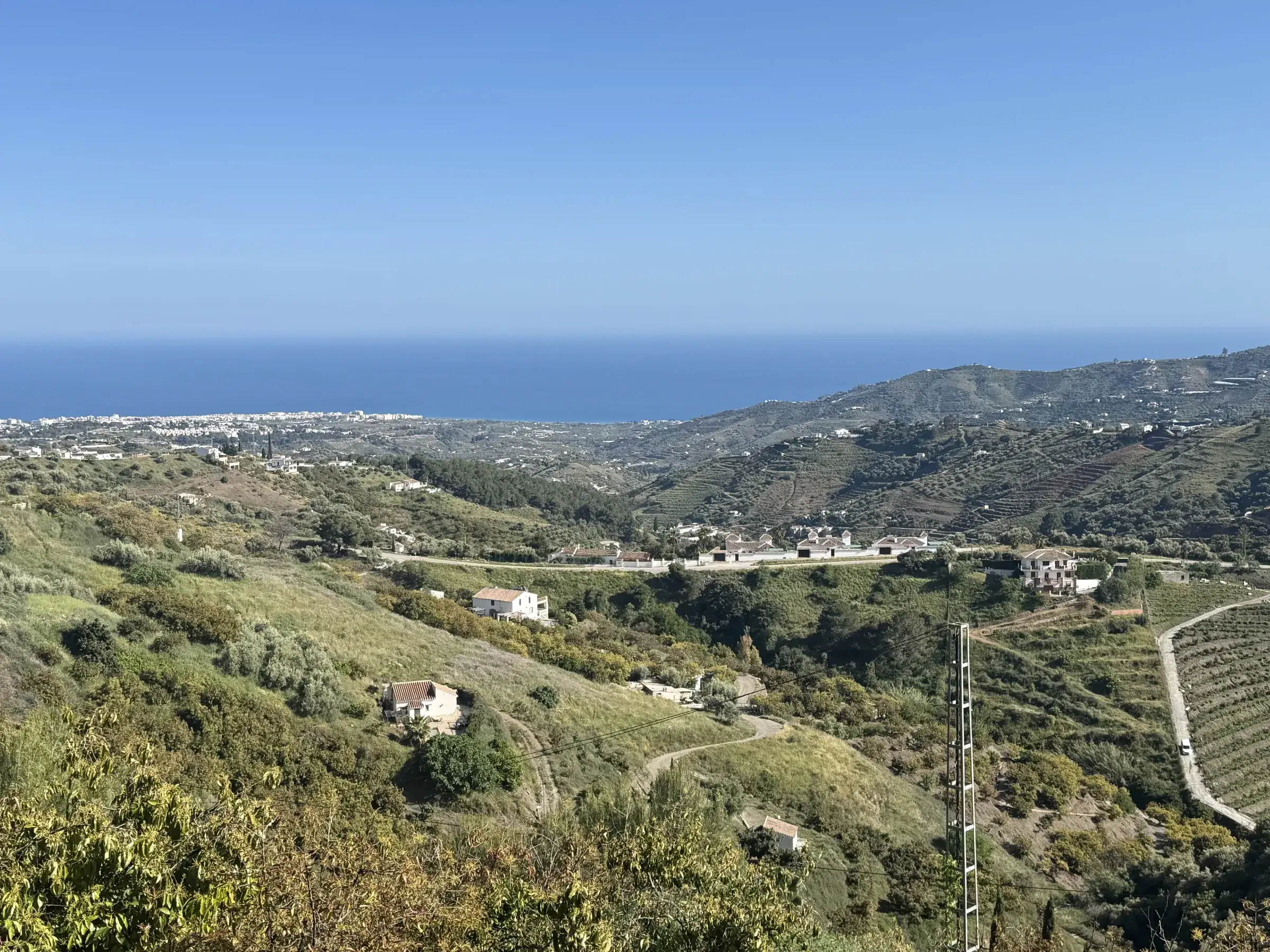
Frigiliana sits in the Axarquía region of Málaga province, in the foothills of the Sierra Almijara. It’s a small mountain village — around 3,000 permanent residents — perched at roughly 300m above sea level, with the Mediterranean glittering in the distance. Málaga is 45 minutes away by car; Nerja is 6 km down the hill on the Costa del Sol.
The famous white villages of Andalucia (pueblos blancos) stretch across this part of southern Spain, and Frigiliana is consistently voted one of the prettiest — a little village of around 3,000 people, and well worth a visit even if you only have a few hours near Frigiliana.
The old town
A walk through Frigiliana’s old town.
The heart of the village is the barrio alto — sometimes called the barrio morisco, the Moorish quarter — a labyrinth of beautiful narrow streets, whitewashed houses with deep-blue doors and windows, and flower pots spilling from every wall. The whole old Moorish town was declared a historic-artistic site in 2014. Start at the top, wander Calle Real, and don’t miss these landmarks along the way.
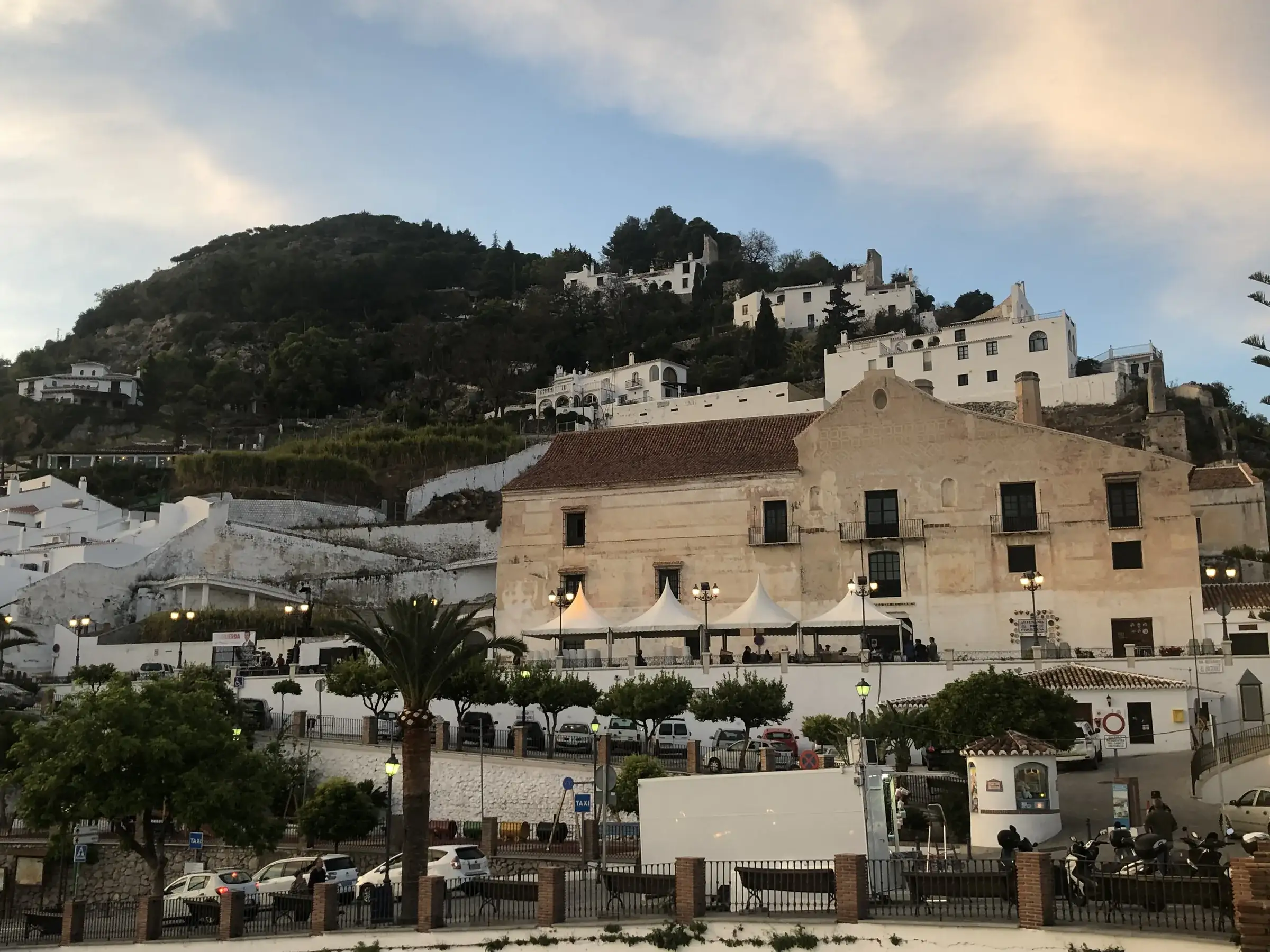
Plaza de las Tres Culturas
A small square dedicated to the village’s Christian, Moorish, and Jewish heritage — and the namesake of August’s big festival.
Fuente Vieja
The old fountain, built in 1640 by the Count of Frigiliana. His coat of arms is still carved above the water.
San Antonio de Padua
The 17th-century village church, a short walk from the centre of the old town.
El Ingenio
A working sugar cane mill producing miel de caña (cane honey) — the last of its kind in Europe.
Castillo de Lízar
The ruined Moorish fortress above the village. The mirador on the way up gives the best view in Frigiliana.
The ceramic panels
Twelve tiled scenes along Calle Real, telling the story of the 1569 Moorish uprising. A walk through the history of Frigiliana Town.
Late August
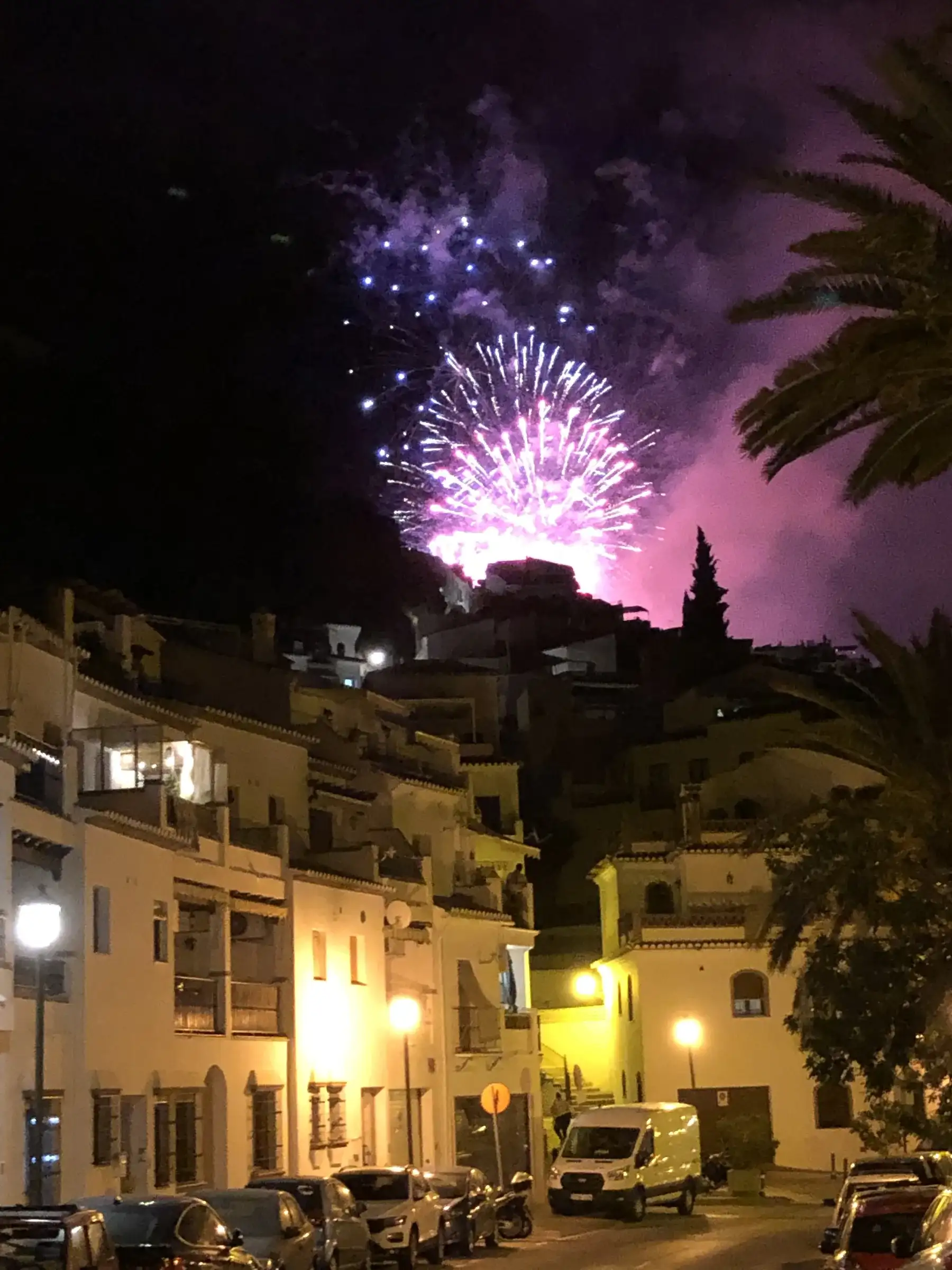
The Festival of Three Cultures is the single best thing that happens in the village all year.
Four days of music, food stalls, and street performance celebrating the Christian, Moorish, and Jewish heritage of the village. Book accommodation months in advance — the village fills up completely.
About the festival →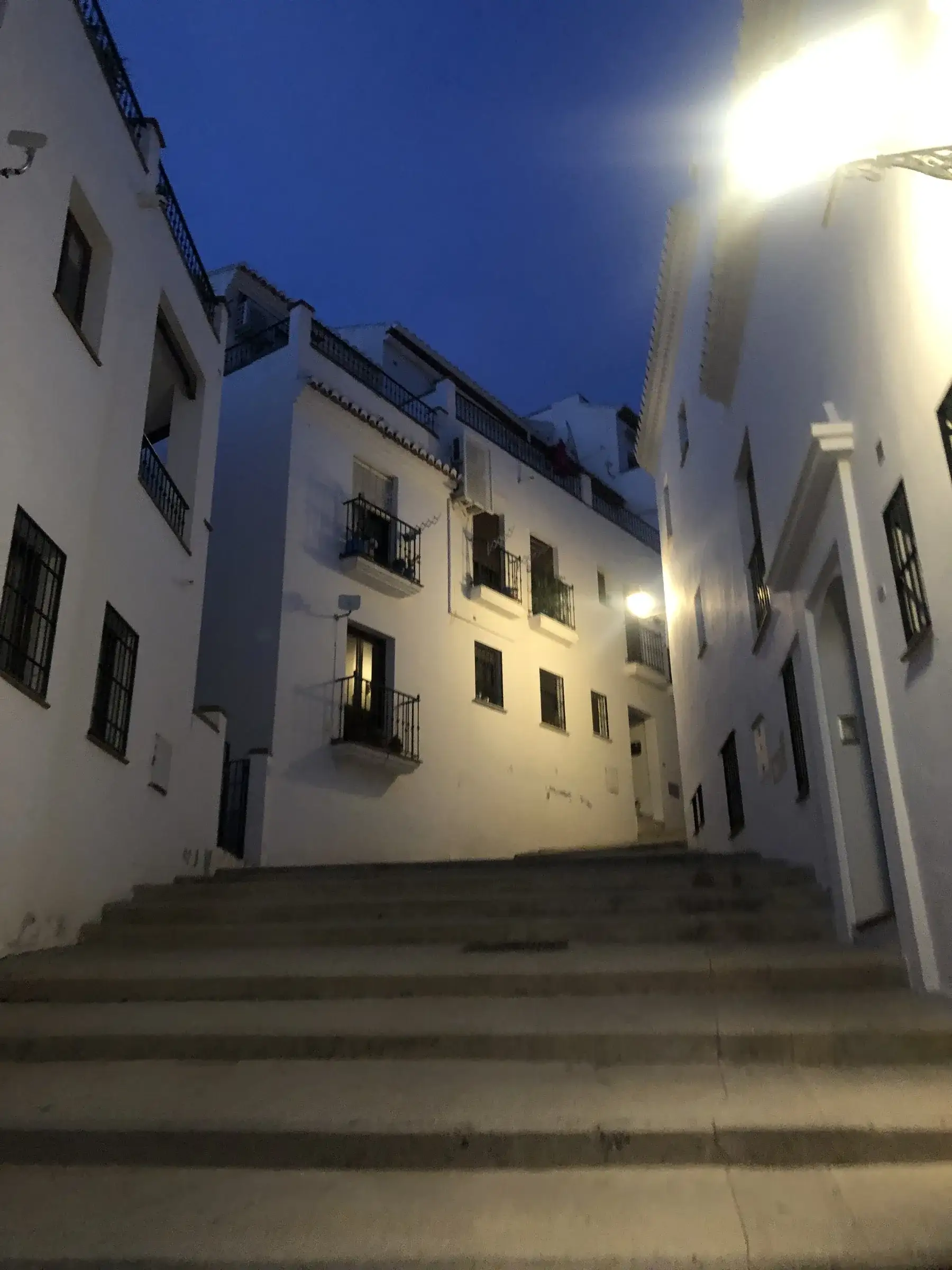
As seen on screen
Frigiliana on Netflix — and on Spanish TV for forty years.
The Netflix limited series Dos Tumbas shot in Frigiliana’s old town in June 2024. The most-watched Spanish coming-of-age series ever made, Verano Azul, was filmed six kilometres down the hill in Nerja in 1979–80. Press now calls it the Axarquía filming triangle — Frigiliana, Nerja and Torrox, three completely different visual textures inside fifteen kilometres.
Filming locations →A thousand years in a hillside village
The history of the white village.
From prehistoric caves to a Moorish stronghold, the 1569 uprising, and the sugar-cane economy that built the modern village.
Early inhabitants
Settled since Neolithic times. Tools and pottery from the nearby Cueva de la Cañada show early agriculture on these hillsides long before the village had a name.
The Moorish centuries
Seven centuries of Moorish rule shape the village you walk through today — the whitewashed walls, the narrow stepped lanes, the irrigation channels, and the sugar-cane farming that defined the economy for centuries.
Reconquista & uprising
Christian forces take Frigiliana in 1487. In 1569, the moriscos rise in revolt and retreat to the rocky hill above — besieged, defeated, and expelled. The tiled panels on Calle Real tell the story.
The modern village
Around 3,000 permanent residents, no chain hotels, one working sugar-cane mill, and enough old-town character to consistently place on lists of Spain’s prettiest villages.
Read the full history of Frigiliana →
Beyond the village
Things to do in and around Frigiliana.
The village itself is small enough to cover in a morning, but sits inside some of the best walking country in Andalucia, within easy reach of beaches, caves, wine country, and more of the Costa del Sol than you’d think.
Walk around the old town
The main event. Start at the top of the village and wander downhill through the barrio morisco.
Hike the Sierra Almijara
Routes from gentle morning walks to full-day peaks in the Sierras de Tejeda, Almijara y Alhama Natural Park.
Acequia del Lízar
Sometimes called Frigiliana’s own Caminito del Rey — a narrow path along an old irrigation channel with spectacular views.
Beaches
Burriana, Playa de Maro, and the secluded coves of the Maro-Cerro Gordo Natural Park, all 15–20 minutes’ drive.
Day trip to Cueva de Nerja
One of Europe’s largest cave systems — the classic combined day trip from Málaga pairs Nerja, the caves, and Frigiliana.
Festival of Three Cultures
Four days of music, food, and performance in late August — the village’s signature cultural event.
Full things to do in Frigiliana guide →
How to get to Frigiliana
Getting to the village.
The simplest way to get to Frigiliana is by car — but buses run frequently from Nerja, and a day trip from Málaga is easier than it sounds.
From Málaga
45-minute drive east along the A-7, exiting for Nerja then turning inland on the MA-5105 up the Río Higuerón valley. A perfect day trip from Málaga.
From Nerja
Frigiliana is 6 km inland — a short drive or a steady 90-minute uphill walk along the old road if you fancy the climb.
Bus service
The local bus service between Nerja and Frigiliana runs every 1–2 hours and takes about 15 minutes. Buses to Nerja connect from Málaga.
Parking in Frigiliana
The old town is pedestrianised. Free car parks sit at the top (near the cemetery) and bottom of the village — walk in from there.
Questions
Frequently asked about Frigiliana.
The questions visitors ask us most often.
Is Frigiliana worth visiting?
How long do you need in Frigiliana?
Can you visit Frigiliana as a day trip from Málaga?
What is Frigiliana famous for?
When is the best time to visit Frigiliana?
Where is Frigiliana?
When to visit
Best time to visit Frigiliana.
Spring (April–June) and autumn (September–October) are the sweet spots — warm enough to enjoy everything outdoors, cool enough to walk the old town without wilting. July and August are hot (often 35°C+) but lively; winters are mild and quiet, good for walking and long lunches. If you can time a trip for late August, the Festival of Three Cultures is the single best thing that happens in the village all year — but book accommodation months in advance.
Planning a trip? Start with our three core guides: